‘Tis the Season for Little Green Men
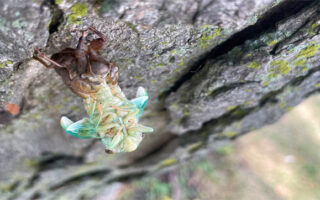
Hello World! After spending somewhere between two and five years underground, this cicada sheds its hard outer covering one more time in preparation for its…
Read MoreHello World! After spending somewhere between two and five years underground, this cicada sheds its hard outer covering one more time in preparation for its…
Read More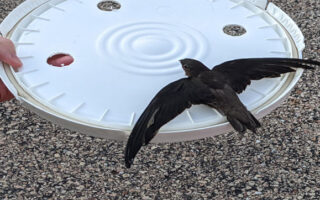
This fledgling chimney swift was among a group of seven rescued swifts that recently joined a Geneva, IL, flock. Soon these birds and thousands of…
Read More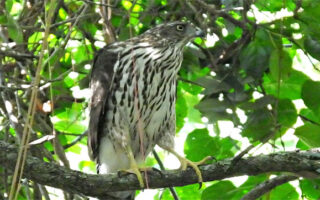
This young Cooper’s hawk can be identified by its immature plumage—a brown back, white breast with crisp brown streaks—as well as its light-colored eyes. Adult…
Read More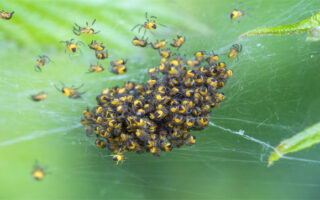
To find sufficient food and avoid getting eaten, spider hatchlings need to disperse quickly. They often take to the air, making use of silken strands,…
Read More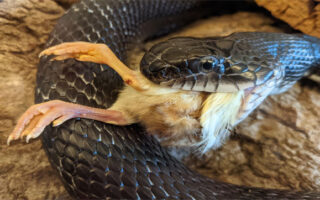
Randy Ratsnake gives another jaw-dropping performance, using an amazing set of mandibular adaptations to swallow his meal. No unhinging, detaching or dislocating required!
Read More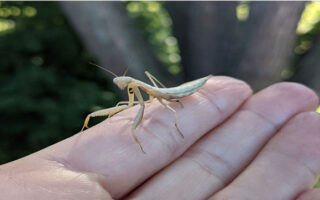
European praying mantises can vary widely in color, from light tan to green, but the ‘bullseye’ on the inner surface of the front leg is…
Read More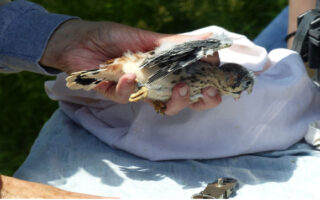
With assistance from wildlife biologists from the Forest Preserve District of Cook County, American kestrel chicks in the Kane County nest box program are weighed,…
Read More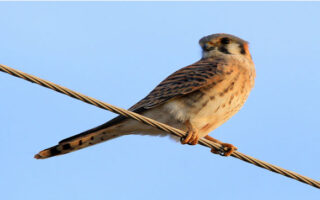
American Kestrels are small falcons that favor grasslands and other areas with low vegetation. These colorful birds, sometimes mistaken for mourning doves, survey their hunting grounds from prominent posts like tall poles and utility lines. Good Natured: American Kestrels! Part One July 15, 2022 Well, it happened again the other day. There I was, sitting
Read More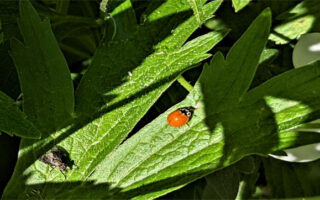
Measuring right around 4 mm, or just over 1/8 in. in length, the polished or ‘spotless’ lady beetle is one of our area’s native ladybug…
Read More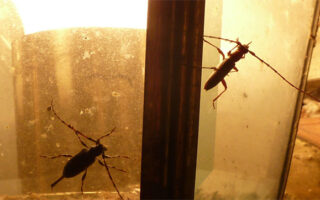
Two long-horned beetles found themselves attracted to the light, and each other, on a recent summer night. Good Natured: Late-night Love with Long-horned Beetles July 1, 2022 The other night, even though I was dog tired, I stepped outside for a bit of fresh air before bed. It’s a simple exercise, one I take part
Read More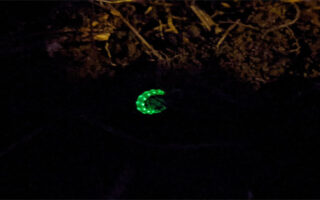
This insect’s genus name, Phengodes, can be traced to the Greek word for light-and with good reason. Phengodes larvae and adult females glow continuously ‘with…
Read More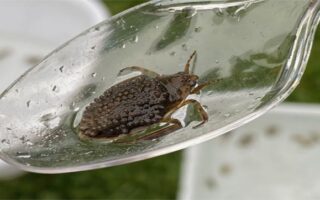
A male giant water bug broods a clutch of +/- 100 eggs on his back.
Read More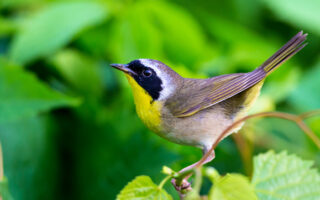
As shown in this stock photo, the male common yellowthroat bears unmistakable plumage that includes a black mask trimmed on top with white. A denizen…
Read More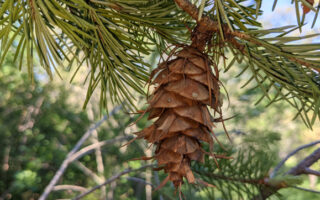
The tail-like bracts protruding from the cones of the Douglas fir serve as a handy identification trait, as well as a subject for folklore.
Read More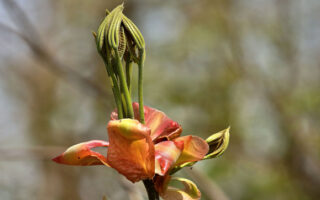
Curly and colorful, the opening leaf buds of the shagbark hickory sometimes are mistaken for exotic flowers in bloom.
Read More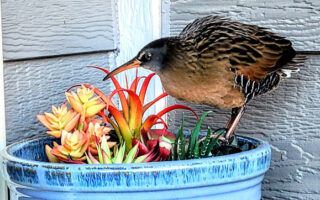
Described as bigger than a robin but smaller than a crow, the Virginia rail is a marsh inhabitant that is considered uncommon in our area.
Read More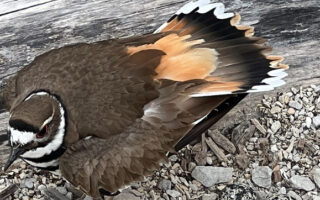
A killdeer warns a potential threat away from her nest by displaying the orange bands on her tail. She as well as her mate will…
Read More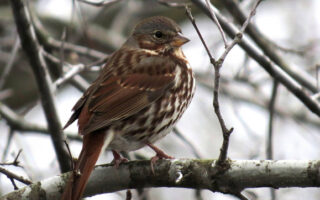
Fox sparrows in our area display a wash of ‘foxy’ reddish brown and are noted for their larger size and vigorous feeding methods.
Read More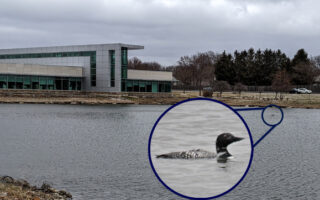
A common loon, on its way to its northern breeding grounds, stopped to rest and feed for a few days at the pond at Delnor…
Read More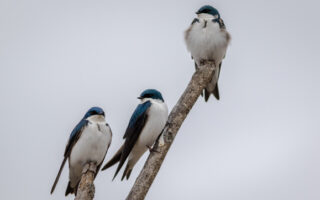
In spring male tree swallows, identified by their iridescent blue backs, arrive on their breeding territories about a week ahead of the females, which have…
Read More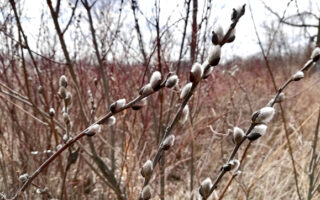
Named for the gray buds of its male flowers, our native pussy willow is an important source of pollen and nectar for early spring insects.
Read More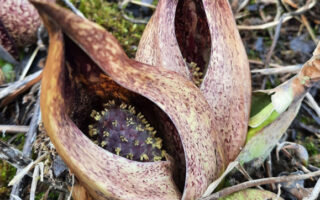
Skunk cabbage in bloom. Later in spring the plant will unfurl its large leaves that, yes, are just as stinky as its flowers. Meanwhile the…
Read More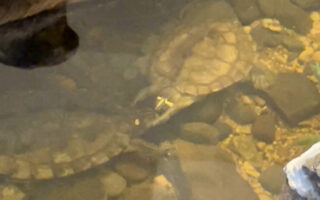
Courtship in the turtle world can include many behaviors, including the fluttering of the foreclaws in a display known as titillation.
Read More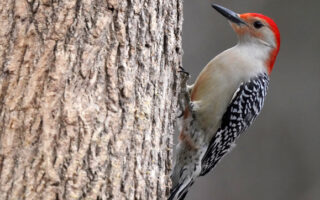
Knock on wood: Instead of singing to declare their territory, woodpeckers drum on trees and other resonant surfaces. Several structural adaptations protect the birds’ brains…
Read More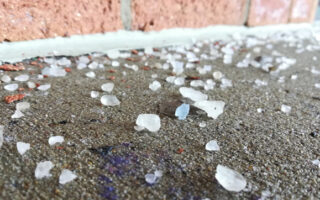
More salt doesn’t mean more melting power. Chloride from excess salt infiltrates our streams and groundwater and puts aquatic life and freshwater resources at risk.
Read More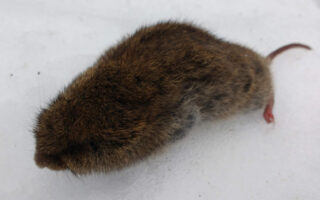
Voles can be differentiated from mice by their rounded, chunky bodies and short tails. Roughly the shape of a small baked potato, they are a…
Read More