The Long Goodbye Part 2
A cabin in the Northwoods, amid a mixed conifer-hardwood forest, is the perfect place to attempt a variety of retirement pursuits. At the top of…
Read MoreRetired Outreach Ambassador for the St. Charles Park District and creator of the District’s Good Natured columns, which originally appeared in print and are now archived online.
The Park Board of Commissioners honored Pam with a resolution on Nov. 4, 2024: click here
The City of St. Charles honored Pam with a Proclamation and Key to the City on Dec 16, 2024: click here
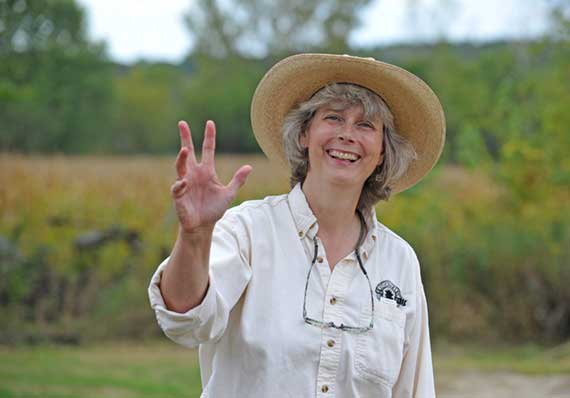
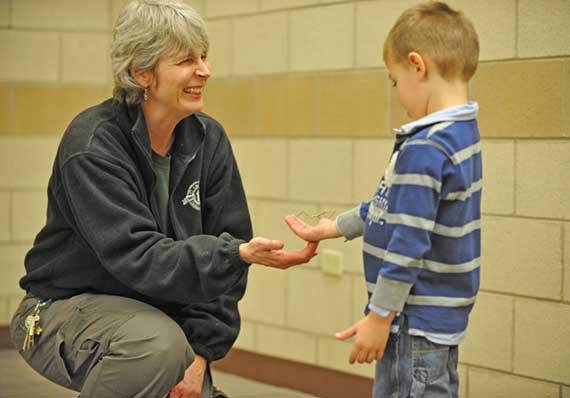
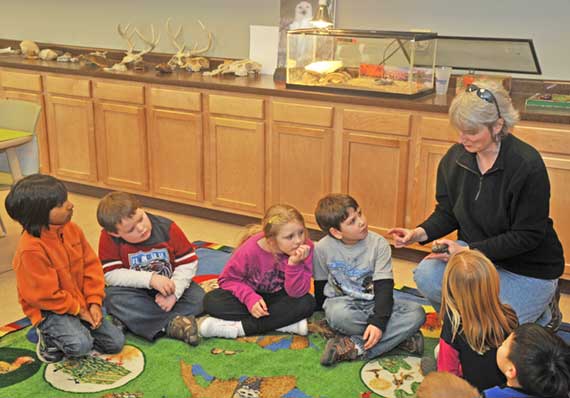
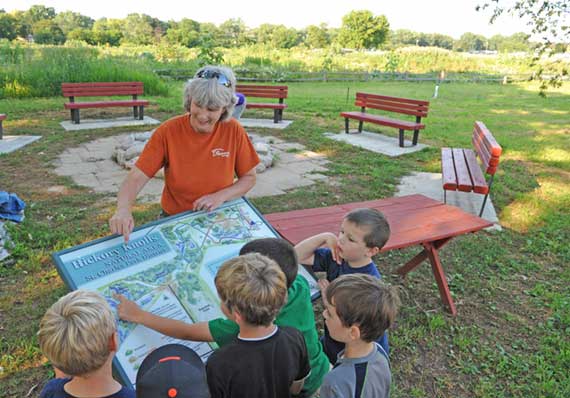
“It’s up on a hill, and when there’s foliage on the trees, you can’t see roads and the sound of traffic is absorbed,” said Otto, adding that the pristine scenic vista gives one the sensation of having traveled back in time.
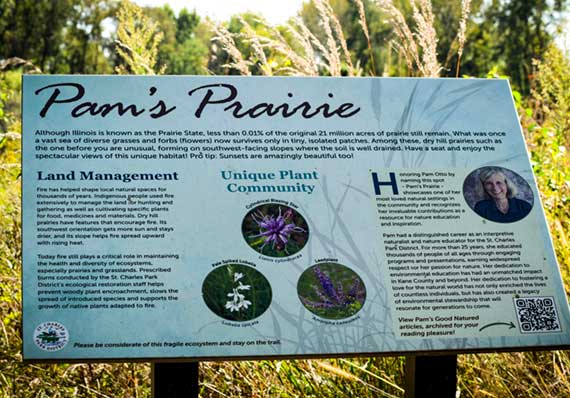
Recently named Pam’s Prairie in honor of Otto’s retirement from the St. Charles Park District, the space largely consists of dry native grasses. A sand prairie, it is also a testament to the efforts of the park district’s ecological restoration staff, whose diligent care has enabled several species to flourish.
“The plants that grow there you just don’t see in many other places,” Otto said.
Indeed, prairie itself is a rarity, with less than .01% of the state’s original 21 million acres of prairie remaining today. Among Otto’s favorites that populate this uncommon and delicate ecosystem is Leadplant.
“The roots go way down, it’s the type of plant that would have caused an early settler’s plow to come to a halt,” mused Otto of the shrub-like plant with distinguishing spikes of purplish-pink flowers.
Another is a grass identifiable by its blue-green color.
“Little Bluestem is a gorgeous plant that grows to just a little over knee high,” Otto said.
Alongside the plants in their varying shapes and sizes live the wildlife drawn to the prairie for habitat and sustenance.
Otto remembers vividly her discovery of a coyote den.
“It looked like someone dumped a pile of play sand from where the coyotes dug it out,” she recalled.
Birds are also frequent visitors. Goldfinches and the small black-and-white Downey woodpeckers are often spotted, as are a host of pollinators including swallowtail and red admiral butterflies as well as a number of bee species.
Though the nature maven enjoys the restored area any time of year, one season in particular stands out.
“Prairies are the last of our natural areas to wake up from dormancy,” she said. “The prairie is just starting to wake up now, and in late summer into fall, all the grasses make for a sea of color and movement.”
She recommends people find time in their day-to-day lives to explore and sit for a spell on a bench overlooking the prairie, perfect for watching summer sunsets.
A cabin in the Northwoods, amid a mixed conifer-hardwood forest, is the perfect place to attempt a variety of retirement pursuits. At the top of…
Read More
The return of bald eagles to Kane County was one of several nature news events that occurred over the last 25 years.
Read More
Oriental bittersweet’s large quantities of fruit grow from the leaf axils of the vine and are strung out along the stems. Remembering the phrase, ‘Strung…
Read More
Where woodpeckers excavate on houses depends on a number of factors: the condition of the wood; if insects are present; whether cracks, crevices or knotholes…
Read More
The Cooper’s hawk, left, and sharp-shinned hawk look very similar but, it turns out, are not as closely related as once thought. Cooper’s hawk photo by M. Leonard Photography; sharp-shinned photo by mirceax. November 22, 2024 I remember exactly where I was when I read the news. I was sitting in the waiting room at
Read More
Less boldly marked than their golden-crowned cousins, the ruby-crowned kinglet does have a noticeable white eye ring and wing bar. However only males bear the…
Read More
Native to eastern Asia, multicolored Asian lady beetles were introduced in the United States as a means of biological insect control. These days they can…
Read More
Kane County Certified Naturalist Sue Mikowski takes an up-close look at the keeled scales of a water snake during a KCCN field trip.
Read More
This earthen pot, smaller than a dime, is the work of a Eumenes potter wasp. The open hole indicates this nest is empty; a nest…
Read More
A turkey vulture–TV for short–warily guards its dinner. The bird’s nearly naked head is an adaptation to its diet, which consists mainly of carrion.
Read More
Tasked with hunting aquatic prey yet lacking water-repellent feathers, cormorants spend a significant amount of time drying off after feeding. Adults are brown-black while immature…
Read More
As dusk sets in, thousands of swifts, Chaetura pelagica, make their way into an uncapped, unlined chimney in Geneva, IL.
Read More
The recent Friday the 13th started off unlucky for this great horned owl, but got better when rescuers arrived. The owl’s third eyelid is visible…
Read More
Although large, even snapping turtles like this one—which is the size and color of a large watermelon—can fall victim to fishing line.
Read More
The mourning cloak butterfly’s common name refers to its dark coloration, but provides few clues to its unique survival strategy.
Read More
With daylight fading, a young red-tailed hawk watches and waits for a meal that never came.
Read More
The landscape at this Delnor Woods pond was lush, but the soundscape was hushed. Nary a chirp could be heard in the early morning air.
Read More
Although they lack chlorophyll, ghost pipes are bona-fide plants. Their roots draw nourishment from nearby fungi in the soil and their nodding flowers are pollinated…
Read More
Rather than round, the wheel formation of these mating damselflies is nearly heart shaped.
Read More
Like a fighter pilot on patrol, this green darner dragonfly scans his territory for prey as well as rival males.
Read More
Just like human babies, insect babies–also known as larvae–sometimes bear little resemblance to the adults they become.
Read More
Hello in there! Earwig droppings contain an aggregation pheromone that attracts both adults and nymphs, resulting in earwig clusters like this one inside some milkweed…
Read More
Rolling hills and wide-open spaces characterize the landscape of downstate Menard County IL.
Read More
The translucent ‘balloons’ on this sprig of bladderwort take in nutrients in the form of tiny arthropods. The other animals in the picture, such as…
Read More
Perched atop a small hackberry tree, a male red-winged blackbird eyes a curious naturalist walking along the Fox River Trail in Geneva.
Read More
Miles from home, a displaced cicada sits, silently, as his next adventure awaits.
Read More
Neither bumble bees nor naturalists can resist the sweet smell of Tilia blossoms; the aromas are equally alluring-and perhaps even more so-at night.
Read More
A newly emerged male polyphemus moth rests after his recent emergence from his home of seven months, the cocoon on the right.
Read More
A newly emerged male polyphemus moth rests after his recent emergence from his home of seven months, the cocoon on the right.
Read More